
Jute Rugs vs Seagrass Rugs: A Buyer's Guide
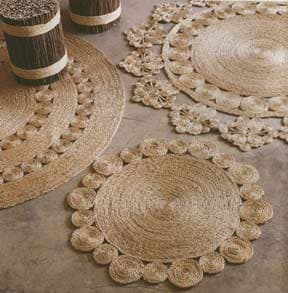
Natural-fibre rugs are one of the fastest-growing lines in home décor, and two materials dominate the conversation: jute and seagrass. For buyers and importers deciding what to stock, here's an honest comparison — and where each one fits.
What is a jute rug?
Jute is a soft, golden plant fibre spun into yarn and woven or braided into rugs. The result is warm, soft underfoot and easy to dye, which is why our jute rugs & carpets range includes everything from a handwoven area carpet (JDP-025) and braided oval rug (JDP-026) to a colourful striped dhurrie (JDP-028), hallway runners and door mats.
What is a seagrass rug?
Seagrass is a harder, smoother grass fibre with a naturally waxy surface. That waxiness makes it more water- and stain-resistant, but also means it is harder, less soft underfoot, and very difficult to dye — seagrass rugs come mostly in natural green-brown tones that mellow over time.
Texture, look and feel
- Jute — soft, warm, slightly fuzzy; takes colour well, so it suits dyed and patterned designs.
- Seagrass — smooth, firm, almost grass-like; limited to natural tones.
If you want a soft rug for a living room or bedroom, jute wins on comfort. If you want a hard-wearing mat for a hallway, seagrass holds up.
Durability and best rooms
Seagrass's water resistance makes it forgiving in entryways and kitchens. Jute is best in lower-traffic, dry rooms — living rooms, bedrooms and studies — where its softness is an asset. For high-traffic entry points, a tightly woven jute door mat (JDP-029) or hallway runner (JDP-030) is a great middle ground.
Care and maintenance
Both are natural fibres: vacuum regularly, blot spills quickly, and avoid soaking. Jute should be kept out of consistently damp areas; seagrass tolerates humidity better.
Cost, customisation and sourcing
Jute is generally the more cost-effective and customisable option — sizes, weaves and dyed colours can all be specified, which is ideal for retailers building a coordinated range. Seagrass offers fewer design options. If you are sourcing from Bangladesh, our complete sourcing guide explains MOQ, lead times and FOB terms that apply to rugs too.
Comparison at a glance
| Jute rug | Seagrass rug | |
|---|---|---|
| Softness | Soft, warm | Hard, firm |
| Water resistance | Lower | Higher |
| Dyeing / colours | Excellent — dyed & patterned | Limited — natural tones |
| Best rooms | Living rooms, bedrooms | Entryways, kitchens |
| Customisation | Broad | Narrow |
Which should you stock?
For most home-décor ranges, jute is the more versatile, dye-friendly and cost-effective choice, with seagrass a useful complement for moisture-prone spaces. Many buyers stock both.
Looking to source jute rugs? Browse the rugs & carpets range or request a quote with your sizes and quantities — we reply within 24 hours.
Frequently asked questions
Are jute rugs more durable than seagrass?
Seagrass is harder and more water-resistant, so it wears better in entryways and kitchens. Jute is softer and best in lower-traffic, dry rooms — but tightly woven jute door mats and runners hold up well in busier spots.
Can jute rugs be dyed or patterned?
Yes — jute takes colour well, so dyed, striped and patterned designs are all possible. Seagrass is very difficult to dye and comes mostly in natural tones.
Which is cheaper to source, jute or seagrass?
Jute is generally more cost-effective and far more customisable on size, weave and colour, which makes it the more flexible choice for a retail range.
Can I order custom sizes of jute rugs from Bangladesh?
Yes. We make jute area rugs, runners, braided rugs, dhurries and door mats to standard and custom sizes. Send your size chart and quantities for a quote.
Sourcing jute products?
Get a custom quote in 24 hours — pricing, samples and lead times.