
Jute Geotextile for Erosion Control: Specifications & Applications
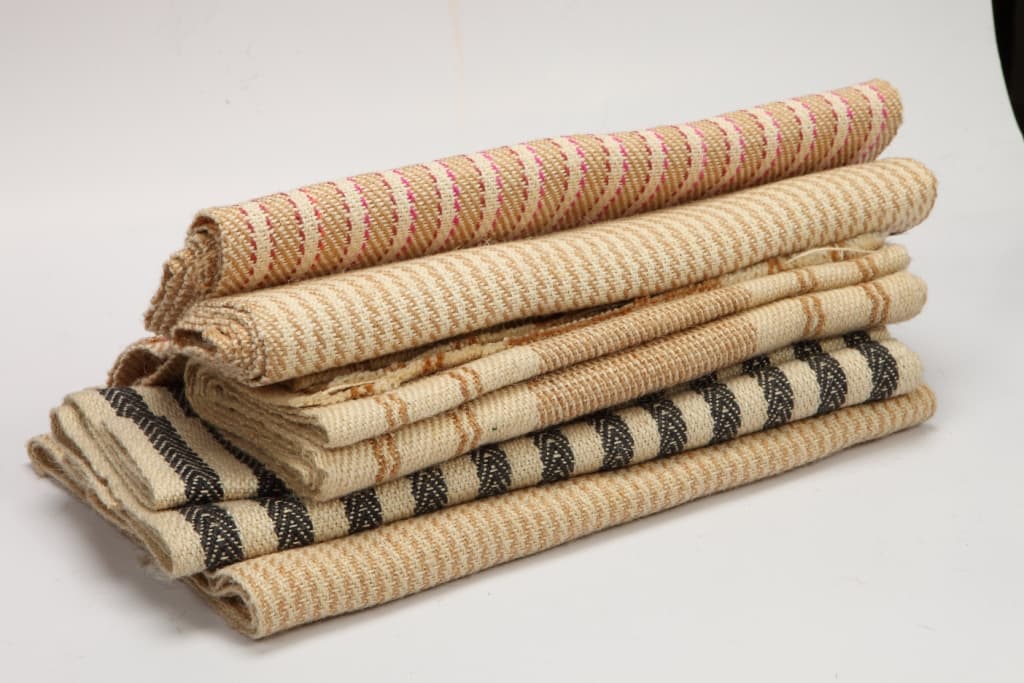
Jute geotextile — also called soil-saver matting — is one of the most useful and least-known jute products. It is a niche line with relatively little competition online, which makes it a strong opportunity for distributors serving landscaping, civil-engineering and agricultural buyers.
What is jute geotextile?
It is an open-weave matting woven from jute yarn, supplied in rolls. Laid over bare soil, it stabilises the surface, retains moisture and seed, and then biodegrades into mulch that enriches the ground — typically within 6 to 24 months, depending on site conditions. It sits in our jute geotextile range alongside the jute geo-textile / soil-saver matting (JDP-077) and related products like jute rope (JDP-056).
How it works
- Erosion control — the mesh holds soil in place against wind and water.
- Moisture retention — it shades the soil, reducing evaporation and helping seeds germinate.
- Revegetation — grass and plants grow up through the open weave.
- Natural decomposition — as it breaks down it adds organic matter, leaving no plastic behind.
Applications
- Slope and embankment stabilisation
- Riverbank and shoreline protection
- Road and rail cuttings
- Landscaping and turf establishment
- Land reclamation and revegetation projects
Jute geotextile technical specifications
Jute geotextile (soil-saver matting) is manufactured to the following typical specification ranges, adjustable to project requirements:
- Weight: 500–900 g/m², selected by slope severity and expected service life — standard rolls are made at 500, 700 and 900 g/m²
- Roll width: 1–4 metres
- Roll length: 25–100 metres
- Mesh aperture: 10–50 mm, depending on soil type and vegetation establishment goals
- Tensile strength: 1.5–3 kN/m
- Biodegradation timeframe: 6–24 months, fully biodegrading once vegetation is established — no synthetic residue left in the soil
These ranges cover the majority of erosion-control and soil-stabilisation applications, from steep slope stabilisation to riverbank and construction-site erosion control. Exact weight, mesh size and roll dimensions are produced to project specification.
Why jute vs synthetic geotextiles
Synthetic (plastic) geotextiles last indefinitely and leave microplastics in the soil. Jute geotextile does the stabilising job during the critical establishment period and then disappears, returning nutrients to the ground. For environmentally sensitive projects and clients with sustainability mandates, that is a decisive advantage.
Sourcing jute geotextile from Bangladesh
As a Bangladesh manufacturer, we produce geotextile to specification and export it FOB Chittagong — see our FOB Chittagong guide for how that works. Industrial volumes ship in rolls or bales.
Need jute geotextile for a project or for resale? Request a quote with your specification (weight, width, quantity) and destination, or browse our jute geotextile range.
Frequently asked questions
How long does jute geotextile last before it decomposes?
Typically 6 to 24 months, depending on site conditions — long enough to stabilise soil and establish vegetation, after which it biodegrades into mulch that enriches the ground.
What weights and widths are available?
500–900 g/m², in roll widths of 1–4 m (1.22 m and 2 m are most common) and lengths of 25–100 m. Exact specifications are produced to your project requirements.
Why choose jute geotextile over synthetic matting?
Synthetic geotextiles persist and shed microplastics; jute does the stabilising job and then biodegrades, leaving no plastic behind — ideal for environmentally sensitive projects.
Do you export jute geotextile in bulk?
Yes — we manufacture to specification and export industrial volumes in rolls or bales, FOB Chittagong, with export documentation.
Sourcing jute products?
Get a custom quote in 24 hours — pricing, samples and lead times.